Birds often like to keep their nests warm, right? Especially for the eggs. It would, therefore, make perfect sense that they use materials to insulate and keep their little lovely ones warm and cosy. But what do they use, and what impact have we had on this?
Hi, my name is Andreas and I am in my 5th semester of the biology bachelor’s degree at Universitet i Bergen. This semester, I had BIO299 – biological research practice – as one of my electives, along with BIO201 (ecology) and BIO250 (palaeoecology), which isn’t relevant. There was some joy, boredom, and plenty of stress involved, as per usual.
The beginning might have been one of the more stressful parts. I would spend hours agonising over writing the perfect email to potential supervisors, attempting to appear interesting, polite, professional. I took a lot of notes on different projects in order to incorporate them into my email as best as I could, and to articulate the best I could what I found intriguing in their projects. Trying not to repeat the words “interesting” and «intriguing» was a stressful endeavour. I wasted a lot of time on the email-writing and project-reading part.
I eventually landed 2 interviews about a week and a few days before the deadline, and I ended up choosing to be supervised under Adele Mennerat with her project “Bird-parasite interactions amid global change”. I get to work with dinosaur stuff! I was also co-supervised by her PhD student Freya Coursey. Both were lovely. I was offered two possible tasks: a more straight-forward task of measuring parasite dimensions and a more exploratory task involving anthropogenic nest-lining material. I chose the nest-lining task. The aim was basically to see if there was a difference in the use of anthropogenic nest-lining material between Blue and Great Tits in urban, suburban, and forest habitats. The data was collected (not by me) from nesting houses set up around Europe for this project.
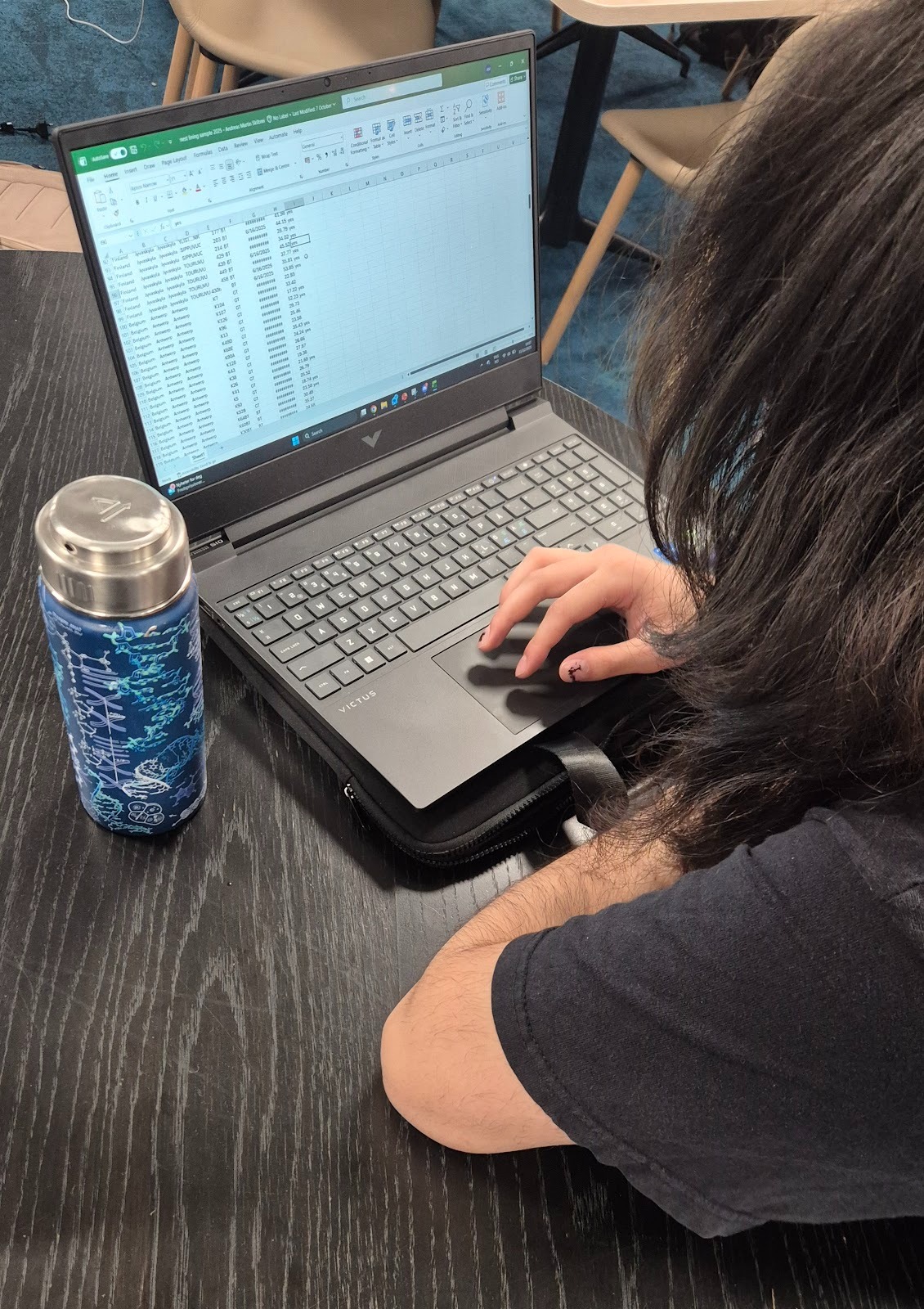
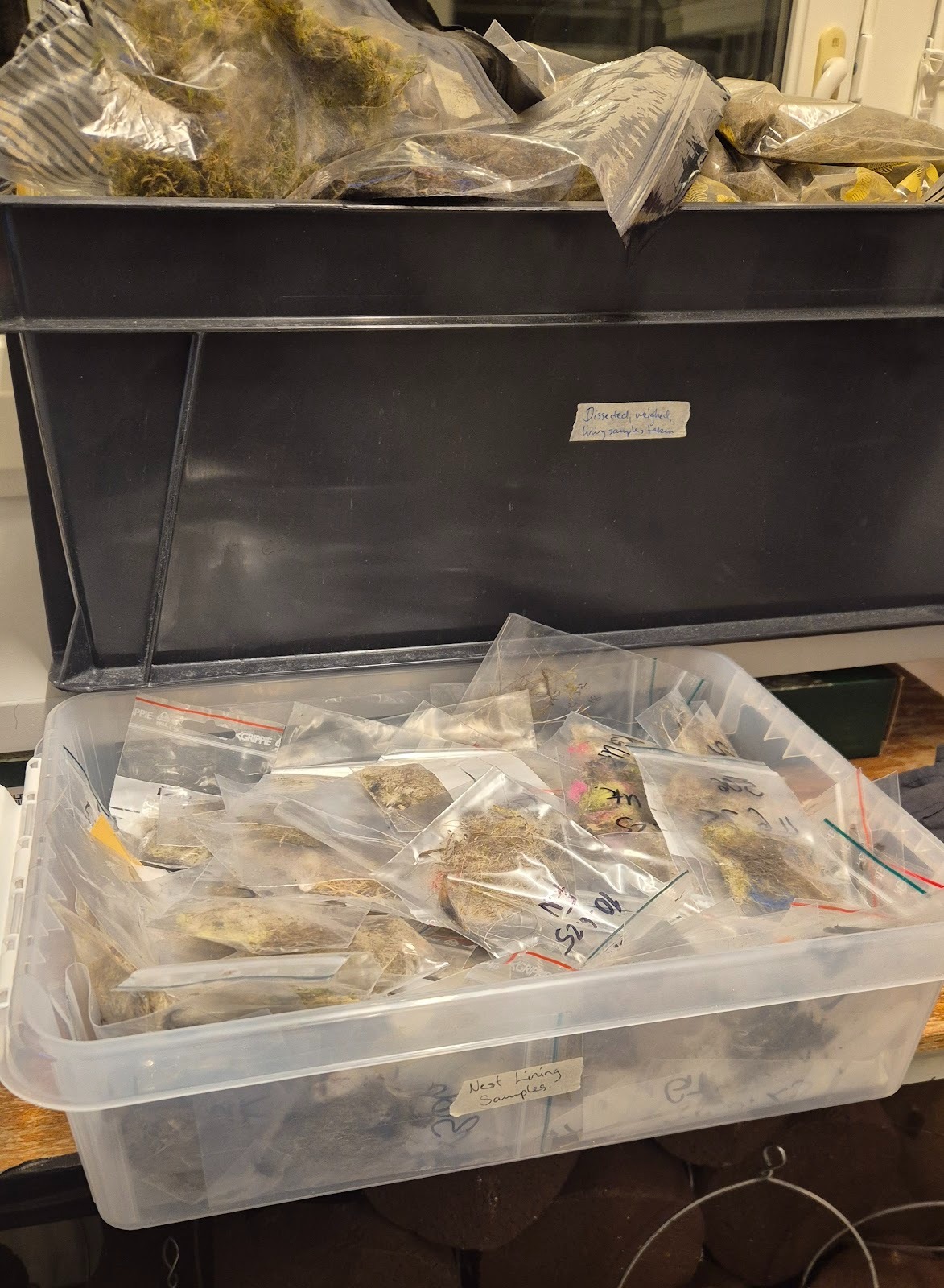
Given the exploratory nature of this task, the first time in the lab was spent simply noting down in an Excel spreadsheet which nest-lining samples we had. Was pretty repetitive, took some quick notes on the different samples just in case (which really sped up data collection later on). I could simply listen to music or podcasts or videos or chat with loved ones during lab sessions. Most lab time was spent doing this.
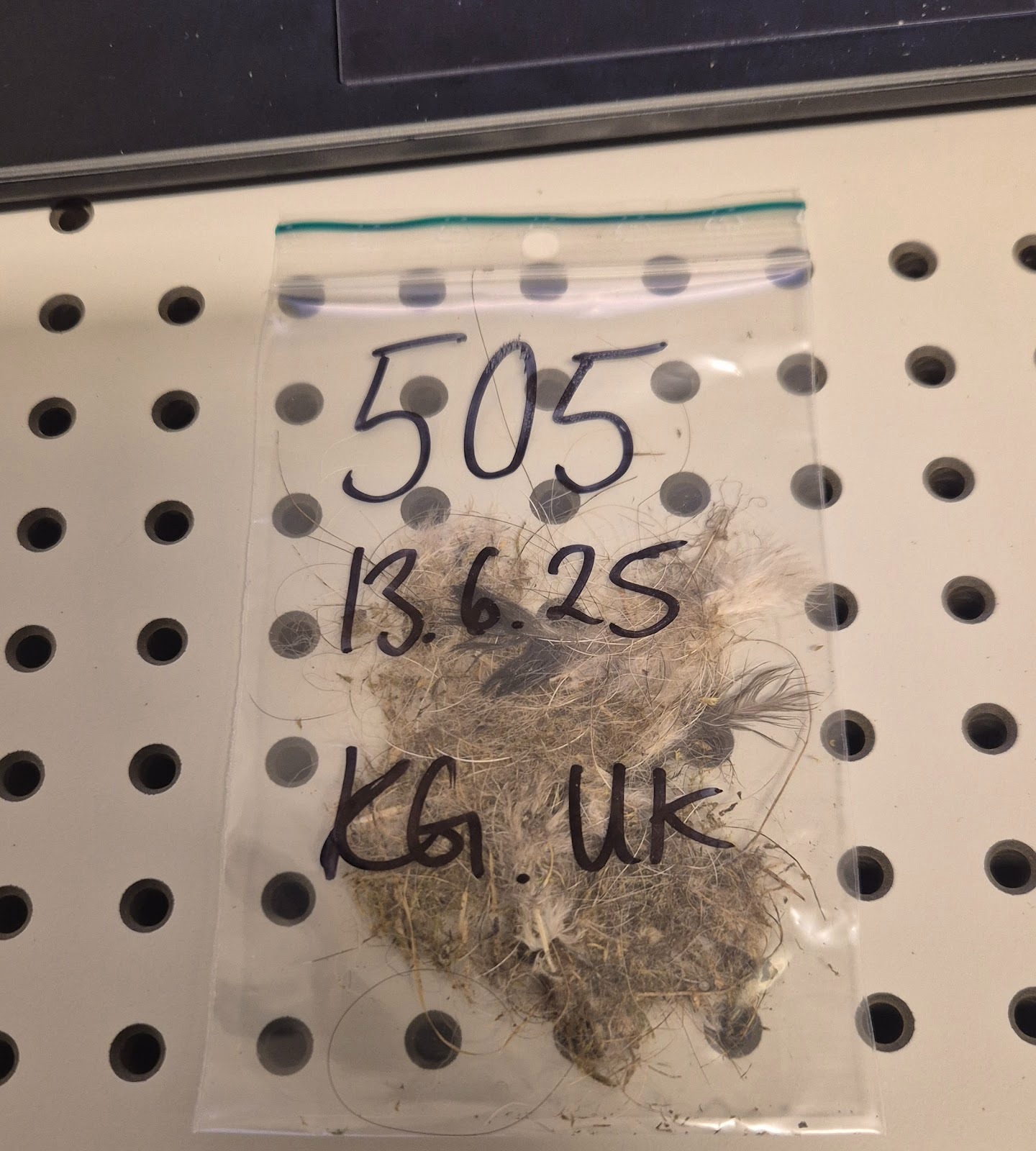
Note: while not relevant to my research, I was often amused whenever I looked at samples from urban Glasgow, Scotland.
I also got to go to one of the bird ecology meetings as well, which was very fun!
Eventually, towards the end, me and Adele agreed on a method for collecting data to make and what I would investigate. I was to count the frequency of nests containing anthropogenic materials and other natural materials and compare the difference in frequencies between urban, suburban, and forest habitats. Freya provided me with the habitat type information. The data collection, like before, was also very simple and allowed me to turn off my brain except for samples that I felt I needed to fiddle with a bit more to properly inspect. I was quite hungry at the end. Next was then doing Excel stuff to do the calculations and make the graphs, whichw as more engaging.
Making the poster was fun. Looking for photos of cute great and blue tits was sweet. And I liked trying to make my poster cute and colourful, and was real happy at the end. Pitching my poster was very nerve-wracking, I stumbled over my words a bit, but so did everyone else. And it was my second pitch that day, the first one was much better.
Now I’m writing this blog and my report. Overall, my time working with this project is like the birds that built these nests: great and blue! Thank you for reading my blog!
Great job man!